
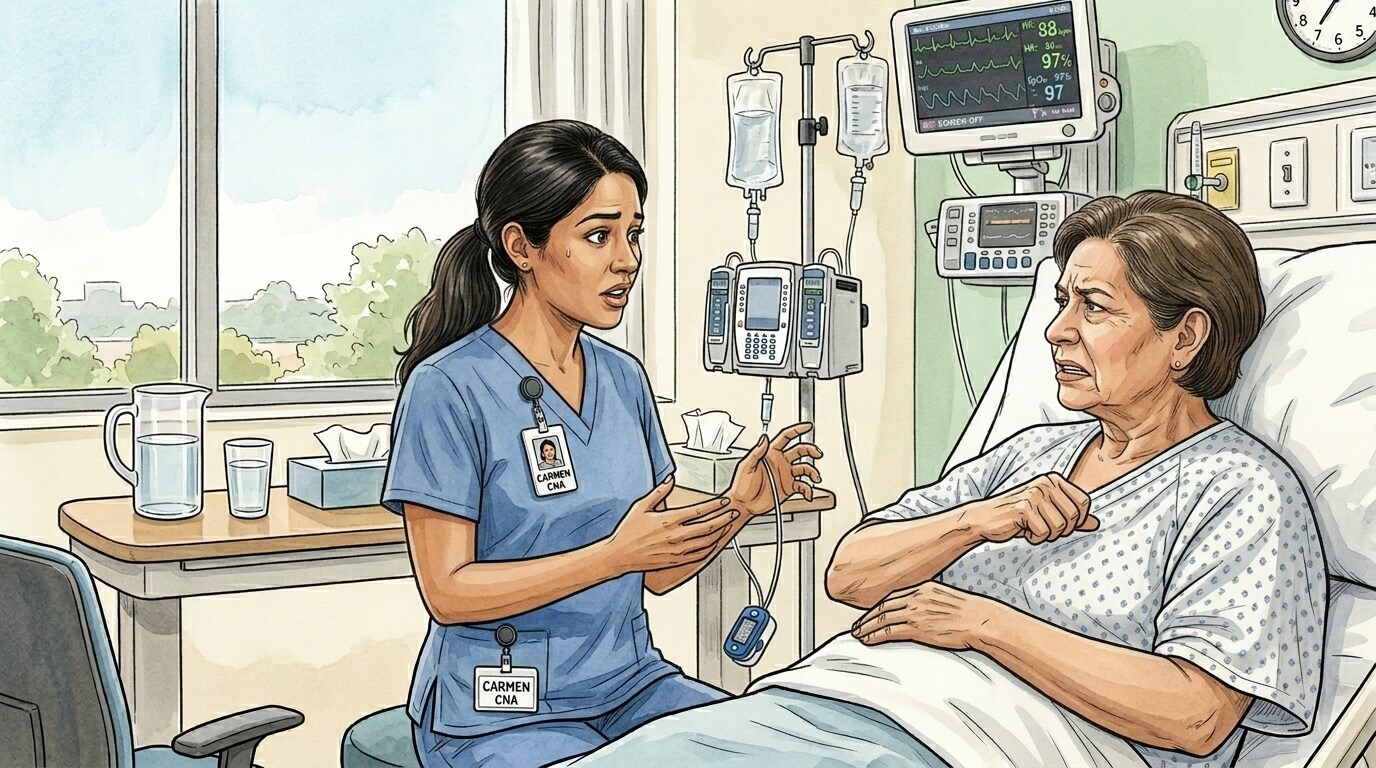
Beyond “Patient Refused”: How to Handle Daily Care Resistance with Professional Dignity
Picture this scene: It is 7:42 a.m. You are halfway through a bed bath for Mr. Osei, a seventy-seven-year-old recovering from a stroke. As you move to wash his lower body, he suddenly pulls the blanket up, turns his face toward the wall, and mutters, “No. Go away”.
In that moment, many skilled workers do what we have all done: they move faster, finish the task in silence, and leave the room feeling rejected. Later, they document a single, vague sentence in the flowsheet: “Patient refused bath”.
But in U.S. healthcare, a “no” is not just a barrier—it is the beginning of a professional clinical conversation. Your success is measured by how you protect a patient’s autonomy while ensuring they stay safe and healthy.
Here are three frameworks from Workplace English for Healthcare Workers to help you move from silence to clinical fluency.
1. Deploy the “Four-Step Refusal Response”
When a patient resists care, your first goal is to lower the tension. Don’t try to “convince” them immediately. Instead, follow the structured response from Chapter 5:
- Accept the “no” calmly: Simply say, “Okay”. This shows you aren’t fighting them for control.
- Ask an open-ended “Why”: “I understand you don’t want to right now. Can you help me understand why?”.
- Listen without arguing: Often, the reason is simple. If Mr. Osei says, “It’s cold,” you can adjust the thermostat or warm the towels.
- Adapt or Escalate: If they truly need a break, offer a choice: “Would you rather I come back in ten minutes, or after breakfast?”.
2. Switch from “Commands” to “Clinical Benefits”
Short, mechanical orders like “Roll over” or “Hold still” can startle a patient and trigger defensive resistance. A professional nursing assistant uses “Dignity Language” to explain the why behind the touch.
- Instead of a command: “Time to turn”.
- Use Dignity Language: “Mrs. Acosta, it’s time to turn you onto your other side. This helps keep your skin healthy”. By naming the clinical benefit (skin health), you treat the patient as a partner in their care, not an object being moved.
3. Chart the Facts, Not Your Opinions
Your documentation is a legal record that protects your license. When a patient declines care, your note must be objective. Avoid judgmental words like “uncooperative,” “stubborn,” or “difficult”.
- The Subjective/Objective standard: Write exactly what the patient said and what you observed.
- Weak Charting: “Patient was difficult and refused his bath”.
- Defensible Charting: “0742 — Patient declined morning bath, stating, ‘I am too tired.’ Skin risk explained; offered to return after breakfast. Patient agreed”.
Master the Language of Daily Care
You already know how to do your job. Now, you need the words to do it in English. “Workplace English for Healthcare Workers” is a functional toolkit designed for these high-stakes bedside moments.
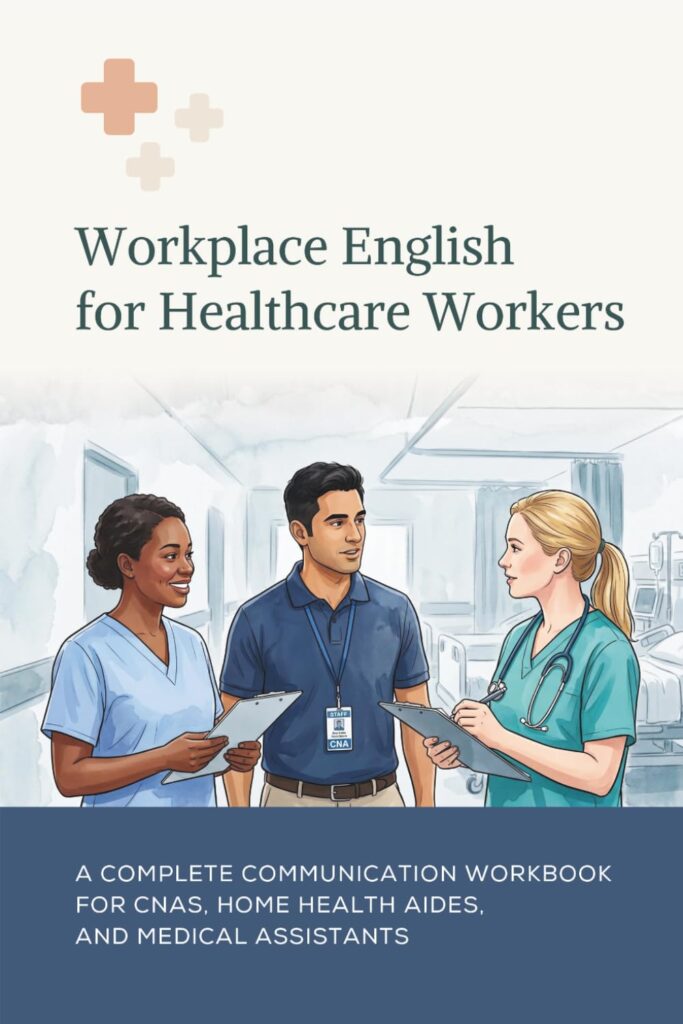
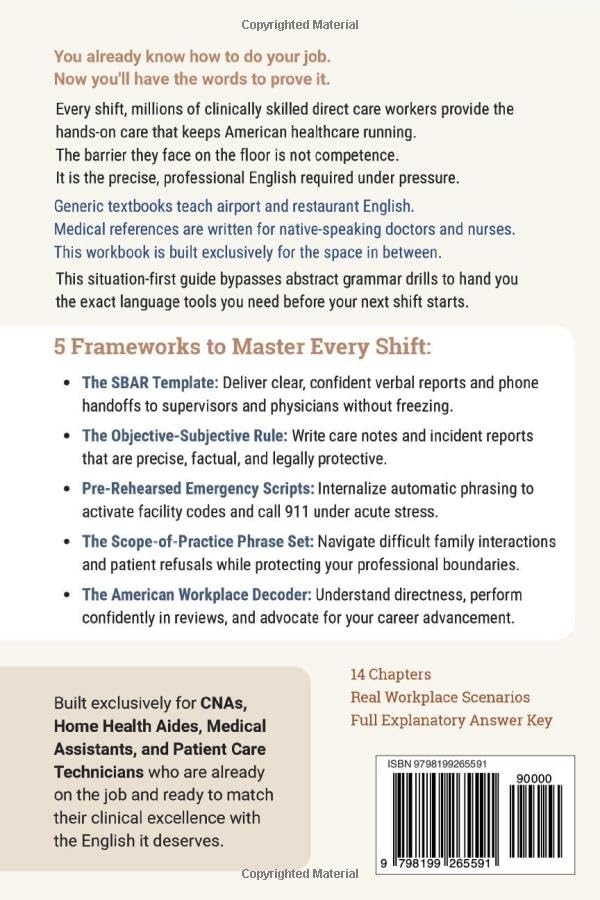
Inside the book, you will master five essential frameworks:
- SBAR Template: For structured, high-stakes handoffs.
- Objective-Subjective Rule: For writing legally defensible care notes.
- Scope-of-Practice Phrase Set: To protect your license during difficult family conversations.
- Call-Out and Check-Back: For high-speed accuracy in emergencies.
- Five Rights Verbalization: To prevent medication errors before they happen.
Specially Adapted for Kindle: Unlike a traditional workbook, the Kindle Edition is designed for a frictionless screen experience. It features Mental Selection Drills and Step-by-Step Role-Plays that you can complete entirely in your head during your commute or on your break.
Go to your next shift with confidence.
Leave a Reply